Many believe that choosing between a lathe and a milling machine for metalworking is straightforward. Do you need to turn something round? Get a lathe. Do you need to cut flat surfaces or pockets? Get a mill. It seems simple, right? But here’s the twist: this black-and-white view often leads to suboptimal choices, costing you time, money, and production efficiency. If you’re looking to buy a CNC milling machine or a lathe, it’s crucial to understand the nuances. Let’s shift your perspective and explore what truly differentiates these essential tools.
Understanding the Core Difference: Rotation vs. Movement
So, what’s the fundamental difference between a lathe and a milling machine? It boils down to how the tool and the workpiece interact. With a lathe, the workpiece rotates at high speed, while a stationary cutting tool moves linearly to shape it. Think of a potter’s wheel – the clay spins, and the potter shapes it with their hands. This makes lathes ideal for creating cylindrical or symmetrical parts, like shafts, bolts, or discs. You get that perfect roundness and smooth finish inherent to the turning process.
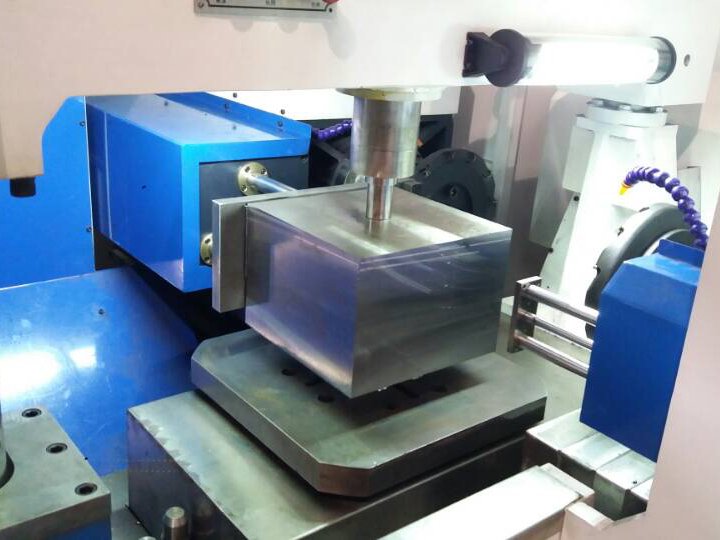
Now, a CNC milling machine works differently. Here, the cutting tool rotates, and the workpiece is typically held stationary or moves linearly on a table. The rotating tool engages with the workpiece to remove material. This allows for much greater versatility in creating complex shapes, flat surfaces, pockets, slots, and intricate contours. It’s like using a handheld router on a piece of wood, but with incredible precision and automation. Understanding this core difference is the first step in deciding which machine is right for your needs.
When to Choose a Lathe: The Art of Turning
When should you lean towards a lathe? If your primary focus is on producing round parts, then a lathe is your go-to machine. Think about components where symmetry and a precise diameter are critical. Shafts, pins, bushings, threaded rods, and custom fittings are classic examples where a lathe excels. The turning process naturally creates a high-quality surface finish on cylindrical surfaces, often eliminating the need for secondary operations. You can achieve very tight tolerances on diameters and lengths with a well-maintained lathe.
Furthermore, lathes are excellent for boring and threading. You can create precise internal diameters (bores) and cut accurate internal and external threads with specialized tooling. If your production involves a high volume of these types of parts, investing in a dedicated CNC lathe can significantly boost your efficiency and output. It’s about leveraging the machine’s inherent strengths for specific tasks. When you need that perfect roundness, a lathe is often the most efficient and cost-effective solution.
When to Choose a CNC Milling Machine: The Power of Versatility
On the other hand, when does a CNC milling machine become the clear winner? If your parts aren’t primarily round, or if they involve complex features beyond simple cylindrical shapes, milling is likely your best bet. Think about creating flat surfaces, pockets, slots, holes (drilled or milled), and complex 3D contours. Milling machines offer a level of geometric freedom that lathes simply cannot match. You can create intricate designs, machine parts with multiple faces, and achieve highly detailed features.
The versatility of a milling machine is its greatest strength. Whether you need to machine aluminum, steel, or even harder materials, a CNC mill can be configured with the right tooling and parameters. This makes them suitable for a vast range of industries, from aerospace and automotive to mold making and general fabrication. If your work involves creating parts with high degrees of complexity, or if you need the flexibility to produce a wide variety of shapes, then investing in a CNC milling machine is often the most strategic choice. It’s the workhorse for creating diverse and intricate components.
Combining Capabilities: The Rise of Mill-Turn Centers
Now, what if your projects require both turning and milling? You know, parts that have cylindrical features but also need milled pockets or flat surfaces? This is where things get really interesting. You could buy separate machines, but that takes up space and requires more complex workflow management. Or, you could consider a mill-turn center. These advanced machines are essentially a hybrid, combining the capabilities of both a lathe and a milling machine into a single unit.
A mill-turn center typically has a lathe-style spindle that can rotate the workpiece, but it also features a milling spindle (often driven by the same head that rotates) that can perform milling operations. This allows you to complete highly complex parts in a single setup, from start to finish. Imagine machining a shaft with keyways, cross-drilled holes, and threaded ends all on one machine. The benefit? Massive reductions in setup time, improved accuracy, and streamlined production. While they represent a significant investment, for shops needing both turning and milling capabilities, mill-turn centers offer unparalleled efficiency and the ability to tackle the most demanding jobs. It’s a powerful solution when you need to buy a CNC milling machine that offers ultimate versatility.
Making the Right Choice for Your Shop
So, how do you decide? It really comes down to your specific needs. If you’re primarily making round parts like shafts or bolts, a dedicated CNC lathe is likely your most efficient option. It’s designed for that specific task and will deliver excellent results with high throughput. But if your work involves a wider variety of shapes, complex features, pockets, or flat surfaces, then a CNC milling machine is probably the better investment. Its versatility allows you to tackle a broader range of projects.
And if you find yourself needing both capabilities frequently, exploring a mill-turn center might be the ultimate solution for consolidating operations and maximizing efficiency. The key is to honestly assess the types of parts you produce most often and the complexity involved. Don’t just buy a CNC milling machine or a lathe because it seems like the default option. Consider the geometry, the materials, the required tolerances, and your production volume. Making an informed decision now will save you time, money, and headaches down the road.
Taking the Next Step in Your Machining Journey
You’ve explored the fundamental differences between lathes and milling machines, understanding when each excels and how mill-turn centers offer a powerful hybrid solution. You know that choosing the right machine isn’t just about the initial purchase; it’s about optimizing your production, reducing costs, and increasing your capabilities. The confusion between these essential tools can now be cleared.
Before: unsure which machine to buy, leading to potential inefficiencies. Then: understanding the core functions of lathes (turning) and mills (milling) → able to identify the right tool for the job. Now: confidently choosing between a lathe, a CNC milling machine, or a mill-turn center based on specific project needs. You have the clarity to make the right decision for your shop. Ready to invest wisely? Start by assessing your most common parts and identify which machine type will best serve your production goals.


